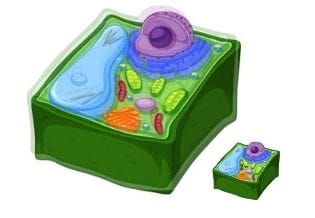
Plant Cell Development - Copyright License
Open licensing for reusable plant cell research.
Plant Cell Development - Copyright License
Open licensing for reusable plant cell research.
License Summary
PCD publishes open access content to support broad reuse with proper attribution. Authors retain copyright while enabling sharing and adaptation.
The license supports educational, research, and policy use of plant cell findings with appropriate citation.
Open licensing enables reuse in teaching, breeding, and policy development.
Clarify reuse terms for supplementary protocols or code.
Report statistical thresholds used for gene expression or omics analysis.
Explain how confounders were handled in observational plant studies.
Describe quality assurance steps for phenotyping workflows.
Clarify whether findings generalize across species or cultivars.
Explain how phenotype scoring was validated.
Explain how data quality checks were performed.
Document any external datasets used in the analysis.
Explain how statistical power was assessed.
Explain the choice of plant model and developmental stage.
Describe any biosafety approvals for transgenic lines.
Reuse Scenarios
Education and Policy
- Teaching and training resources
- Public policy and regulatory guidance
- Plant science outreach materials
Research and Industry
- Derivative studies with attribution
- Biotech and breeding applications
- Method adaptation for new settings
If third party images are used, obtain permission and cite sources clearly.
Clear reporting of cell lineage methods improves reproducibility across plant models.
Include details on sample preparation and tissue handling to avoid bias.
Report software versions and pipelines for bioinformatics analyses.
Explain how sample sizes were determined for developmental assays.
Explain how missing data were handled in longitudinal growth studies.
Provide context for translational relevance to crop improvement.
Describe any deviations from standard protocols and their impact.
Clarify how pathway annotations were validated.
State limits of detection for imaging or molecular assays.
Describe how fluorescence thresholds were selected for imaging.
Explain how tissue specificity was validated.
Attribution Requirements
Reuse must include citation of the article title, DOI, and journal name.
- Credit the original authors
- Link to the DOI and journal page
- Indicate any modifications
Notify the editorial office if funder rules require specific license wording.
Document growth conditions and photoperiods to contextualize cellular responses.
Clarify how developmental stages were defined and verified.
Describe batch effects and correction methods in imaging or sequencing data.
Report statistical corrections for multiple testing in omics data.
Report effect sizes relative to developmental benchmarks.
Describe replicate structure and experimental randomization.
Summarize implications for plant development and resilience research.
Describe how data deposition supports future reuse.
Describe how cross lab variability was minimized.
Report normalization steps for transcriptomics or proteomics data.
Report how phenotypic scoring was blinded or verified.
Reuse Pathway
Cite the Source
Include DOI, journal name, and author attribution.
Check Permissions
Verify third-party content rights.
State Modifications
Describe edits or adaptations made.
Preserve Context
Maintain scientific meaning and interpretation.
Reuse should preserve scientific context and interpretation.
Explain how imaging parameters were calibrated for microscopy assays.
Describe controls for hormone treatments and concentration gradients.
Clarify temperature and light regimes for growth experiments.
Provide a rationale for selected markers or reporter lines.
Include details on controls for stress or nutrient treatments.
Clarify cell cycle staging methods and validation.
Include key assumptions in developmental models.
Report time to analysis for high throughput workflows.
Clarify how hormone pathway interactions were interpreted.
Clarify how replicates were balanced across treatments.
Compliance Steps
Clear attribution protects author rights and improves transparency in derivative works.
- Confirm license alignment with funder requirements
- Verify permissions for third party material
- Preserve DOI attribution in reuse
Include attribution guidance for figures and derived datasets.
Summaries connecting cellular mechanisms to crop outcomes strengthen impact.
Provide uncertainty measures for key developmental outcomes.
Include references to standards or plant nomenclature guidance.
Discuss limitations related to tissue specificity or developmental stage.
Document imaging time points and resolution settings.
Report how anatomical sections were prepared and stained.
Report calibration routines for imaging devices.
Summarize implications for breeding or biotechnology.
Document how cell wall composition was quantified.
Include brief notes on growth chamber calibration.
Editor in chief