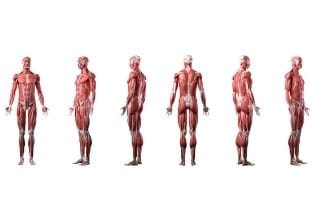
Journal of Skeletal Muscle - Call for Papers
From molecular pathways to performance and rehabilitation outcomes.
Journal of Skeletal Muscle - Call for Papers
From molecular pathways to performance and rehabilitation outcomes.
Call for Papers
Skeletal Muscle invites submissions that advance skeletal muscle science from molecular signaling to clinical and performance outcomes. We prioritize work that ties mechanism to function and offers clear translational value.
Keep the story tight: show the mechanistic trigger, document the functional response, and explain the real world impact for patients, clinicians, or performance teams.
- Mechanistic clarity with validated assays or biomarkers
- Functional outcomes tied to strength, endurance, or recovery
- Clear staging of interventions and observation windows
Muscle Biology
- Myogenesis and satellite cell activity
- Protein turnover and hypertrophy signaling
- Muscle fiber type specification
- Neuromuscular junction regulation
- Cellular stress and repair pathways
Performance
- Strength and power outcomes
- Fatigue, recovery, and resilience
- Metabolic adaptation and efficiency
- Exercise intervention protocols
- Biomechanics and muscle mechanics
Rehabilitation
- Sarcopenia and muscle wasting
- Myopathies and neuromuscular disease
- Injury recovery and rehabilitation
- Aging and frailty risk
- Therapeutic strategies and trials
We are especially interested in submissions that pair mechanistic insight with measurable performance outcomes.
Report exercise protocols with intensity, frequency, and duration details.
Include details on sample handling to preserve muscle tissue integrity.
Explain how muscle fiber composition was measured and validated.
Explain how nutrition or supplementation variables were controlled.
Include time points for follow up and recovery assessments.
Explain how functional outcomes relate to clinical thresholds.
Impact Pathway
Define the mechanism
Connect molecular signals to muscle adaptation.
Validate in models
Use robust cohorts, assays, or experimental systems.
Measure function
Report performance, strength, or recovery outcomes.
Translate
Show clinical or performance implications.
Clear staging of training interventions and recovery windows improves the interpretability of findings.
Describe normalization steps for metabolomic or proteomic profiles.
Describe how confounders were handled in longitudinal training studies.
State how fatigue or recovery outcomes were defined and compared.
Document compliance rates for training or rehabilitation protocols.
Describe how imaging regions of interest were selected.
Describe cross validation methods for predictive models.
Additional Focus Areas
Clinical Cohorts
Human studies with clear diagnostic, functional, or recovery endpoints.
Translational Models
Animal or in vitro models with direct clinical relevance.
Technology
Imaging, omics, and sensor based monitoring of muscle outcomes.
Population Health
Epidemiology, risk profiling, and public health impact.
Studies that connect cellular adaptation to clinical or athletic outcomes are prioritized for review.
Explain how muscle function outcomes were validated and replicated.
Provide context for translational relevance to rehabilitation or sports medicine.
Describe randomization and blinding procedures when applicable.
Provide baseline characteristics for all cohorts and subgroups.
Explain the inclusion of sex specific or age specific analyses.
Why Publish With JSM?
Rigorous peer review by muscle science experts, rapid editorial decisions, and open access visibility that connects your findings to clinicians, rehabilitation teams, and performance scientists worldwide.
Transparent reporting of methods and replication strategies supports faster editorial decisions.
Document imaging settings for fiber typing and morphology assays.
Clarify how satellite cell activation was measured and quantified.
Report instrumentation settings for strength and power testing.
Summarize how muscle architecture outcomes were quantified.
Report quality control steps for histology or biopsy processing.
Article Types
Original Research
Full studies with novel mechanistic or functional findings.
Systematic Reviews
Evidence syntheses that shape muscle science practice.
Clinical Trials
Intervention studies with clear outcomes.
Perspectives
Expert insights on emerging muscle research.
Authors should articulate the clinical or performance relevance in the introduction and discussion.
Note how animal or human cohorts were stratified by age and sex.
Discuss limitations related to cohort size or model specificity.
Include calibration routines for dynamometers or metabolic carts.
Report effect sizes alongside statistical significance values.
Document data processing pipelines for omics workflows.
Submission Benefits
- Rapid expert review aligned with muscle science priorities
- Constructive feedback from specialized reviewers
- Global open access reach for clinical and performance communities
- High visibility for translational and rehabilitation outcomes
Your research helps advance muscle health, recovery, and human performance across diverse populations.
Submissions that compare intervention effects across cohorts help establish translational value.
Summaries that connect molecular signals to functional performance strengthen impact.
Document how muscle strength or endurance outcomes were standardized.
Clarify the rationale for selected biomarkers and endpoints.
Describe how missing data were handled in longitudinal analyses.
Clarify assumptions in computational or modeling analyses.
Submission Routes
ManuscriptZone
- Structured submission workflow
- Reviewer feedback tracking
- Revision and decision history
Simple Submission
- Fast upload for rapid triage
- Direct editorial review
- Same peer review standards
Links: https://oap.manuscriptzone.net/ | https://openaccesspub.org/manuscript-submission-form
Clarify recruitment and activation markers for the muscle populations studied.
Report statistical thresholds used for mechanistic or clinical outcome analysis.
Describe how data deposition supports future reuse and verification.
Describe adverse events or safety monitoring for interventions.
Clarify sample size calculations and power assumptions.
Provide references for validated scales or questionnaires used.
Submit Your Skeletal Muscle Manuscript
Advance muscle science through rigorous, evidence based publication.
Editor in chief