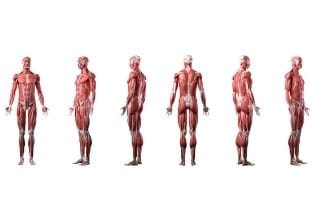
Skeletal Muscle - Editor Resources
Guidance and tools for editorial responsibilities.
Skeletal Muscle - Editor Resources
Guidance and tools for editorial responsibilities.
Editor Resources
Editors have access to decision templates, policy guidance, and workflow tools to support consistent review outcomes.
Resources are updated regularly to reflect best practices in muscle science publishing.
- Decision letter templates
- Conflict of interest guidance
- Ethics and data integrity checklists
- Reviewer selection support
Clarify recruitment and activation markers for the muscle populations studied.
Describe normalization steps for metabolomic or proteomic profiles.
Document imaging settings for fiber typing and morphology assays.
Summaries that connect molecular signals to functional performance strengthen impact.
Include details on sample handling to preserve muscle tissue integrity.
Provide context for translational relevance to rehabilitation or sports medicine.
Discuss limitations related to cohort size or model specificity.
Describe how data deposition supports future reuse and verification.
State how fatigue or recovery outcomes were defined and compared.
Report instrumentation settings for strength and power testing.
Clarify the rationale for selected biomarkers and endpoints.
Explain how nutrition or supplementation variables were controlled.
Provide baseline characteristics for all cohorts and subgroups.
Report effect sizes alongside statistical significance values.
Clarify sample size calculations and power assumptions.
Describe how imaging regions of interest were selected.
Report quality control steps for histology or biopsy processing.
Support
Need additional resources? Contact [email protected].
We provide assistance for complex editorial cases.
Report exercise protocols with intensity, frequency, and duration details.
Explain how muscle function outcomes were validated and replicated.
Note how animal or human cohorts were stratified by age and sex.
Report statistical thresholds used for mechanistic or clinical outcome analysis.
Describe how confounders were handled in longitudinal training studies.
Clarify how satellite cell activation was measured and quantified.
Document how muscle strength or endurance outcomes were standardized.
Explain how muscle fiber composition was measured and validated.
Describe randomization and blinding procedures when applicable.
Include calibration routines for dynamometers or metabolic carts.
Describe adverse events or safety monitoring for interventions.
Document compliance rates for training or rehabilitation protocols.
Summarize how muscle architecture outcomes were quantified.
Describe how missing data were handled in longitudinal analyses.
Include time points for follow up and recovery assessments.
Explain the inclusion of sex specific or age specific analyses.
Editor in chief